Go To Home Page About Retro Gran Topics I Write About Other Places You Can Find Me Image Map
Showing posts with label Spotlight On. Show all posts

Thursday, September 5, 2013

Spotlight On: Raquel Welch

Raquel starred in a remake of One Million Years B.C. in 1966. Her only costume was a two-piece deer skin bikini. She was described as "wearing mankind's first bikini" and the fur bikini was described as a "definitive look of the 1960s". One author said, "although she had only three lines in the film, her luscious figure in a fur bikini made her a star and the dream girl of millions of young moviegoers". A publicity still of her in the bikini became a best-selling poster and turned her into an instant pin-up girl. The film raised her stature as a leading sex symbol of the era.  In 2011, Time listed Welch's B.C. bikini in the "Top Ten Bikinis in Pop Culture" and dubbed her as "America's number one sex symbol".


Today is the birthday of one of the most beautiful women ever, Raquel Welch.  She is 73 and still as gorgeous as ever. Her sultry beauty, talent and vibrant personality set her apart from those who came before her and she continues to leave an indelible legacy for those who follow.

At the age of 22, she arrived in Hollywood as a single mother with her two small children; only to find that the studio star-making system was long gone. Nonetheless, she carved out a place for herself in movie history, and broke the mold of the submissive blonde bombshell.  She starred in over 45 films and won a Golden Globe for best actress in The Three Musketeers.

The world has always seemed focused on her beauty but she strove to counteract that perception. In the 80’s she changed directions and made the leap from the movies to Broadway, debuting in the hit musical Woman of the Year. This shattered the myth that she was simply a celluloid invention.

An early devotee of yoga and a forerunner in the field of fitness, Raquel authored the best-selling classic yoga book RAQUEL: Total Beauty and Fitness in 1984. She introduced Yoga to a whole generation of women and ignited a new exercise trend.  

She created The Raquel Welch Wig Collection; the most successful enterprise of its kind in the world. She has also succeeded Catherine Deneuve, to become the most recent Icon Face of M.A.C Cosmetics – with a line of international signature cosmetics.

One of Raquel’s latest project is a new book, Raquel: Beyond The Cleavage. In it she speaks intimately about the trials and tribulations of aging in the public eye and offers an insightful guide to becoming a truly age-defying woman. At present, Raquel is the spokesperson “behind those Foster Grants,” in a new television commercial campaign for Foster Grant sunglasses and readers. 

Join me in wishing her a very Happy Birthday!


Friday, August 30, 2013

Happy Birthday Dad

My Dad in Elementary School

Today is my Daddy's birthday.

He is the world's greatest man in my eyes.

On this, his 68th birthday, we are watching him struggle and the life drain from him.

It is a very painful time in our lives.

But we will cherish every moment we have left.

So here's to my Dad, my first true love.

My dad at around 15 years of age.

Dad in the early 60s working on a fence.

Dad in 1964

My Dad with his dad and grandmother in the early 60s

Dad was what is known in these parts as a 'Shade Tree Mechanic' when he was young and then later in life he owned his own Garage.  My brother still runs this garage today.

My dad with my older sister and myself in 1964

Dad and a baby me in 1964.  You can see my older sister in the background on the left.

My Dad (back row on left) with his parents and his brothers in the early 60s.  Dad had three sisters that are not included in this photo.  My grandfather passed away not long after.

Dad in the mid 60s.  He was a 'stylin' man!

Dad with my Grandma - his mother-in-law.  I've spoke before about living near my Grandma when we were growing up and my Dad always took care of her.

Dad around 1968

Dad with my older sister around 1963

Dad with my sister and I in 1967

Mom and Dad, myself and my sister around 1968 - I started to not include this photo because it has some water damage from being stored in our basement for years but I loved my mom's dress and decided to share it anyway.
Me and my Dad playing a game at my 16th Birthday party in 1980

My Dad playing in the kiddie pool with the Grandkids in 2002

My Dad with my twins in 1994

Dad clearing off some property.  He was always working, not one to sit still very long.

Dad in 2005 with 9 of his 20 grandchildren and 2 of his 14 great-grandchildren.

Dad in 1975

 Happy Birthday Daddy!!


Friday, August 2, 2013

Spotlight On: Myrna Loy

Myrna Loy


Myrna Loy was born Myrna Adele Williams on August 2, 1905, in Radersburg, Montana. Her father was the youngest person ever elected to the Montana State legislature. Later on her family moved to Helena where she spent her youth.

When Myrna was 13, her father died of influenza and the family moved to Los Angeles. She attended school in L.A. at the Westlake School for Girls. This is where she caught the acting bug and began acting at the age of 15 when she appeared in local stage productions in order to help support her family. Some of the stage plays were held in the now famous Grauman's Theater in Hollywood.

Myrna Loy

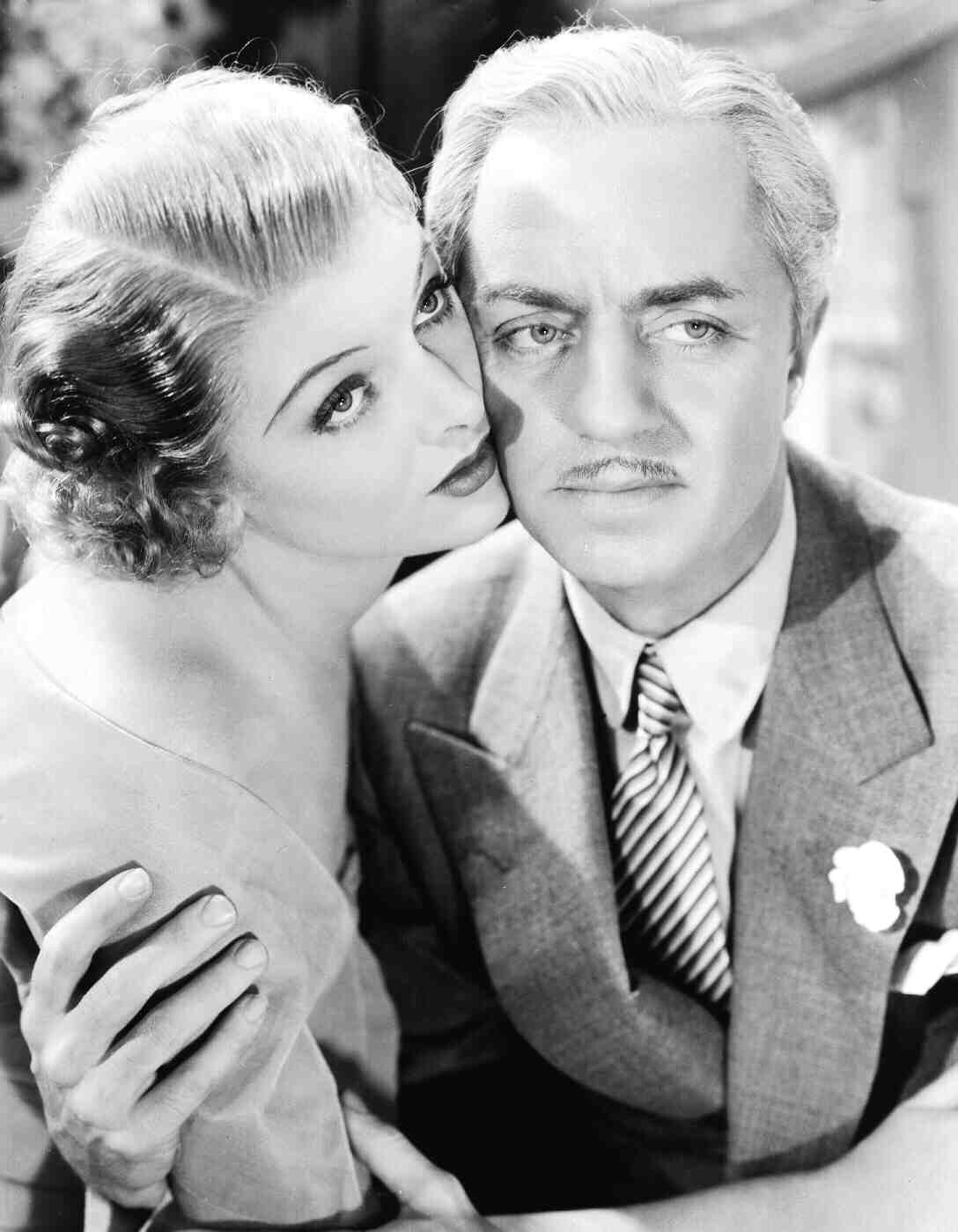
Myrna started her film career at the end of the silent film era playing parts of exotic,Theda Bara like, femme fatales. With the invention of "talkies" Myrna was one of the few stars that successfully made the transition and she was recast into roles of witty, professional women, although she most always had small roles.  Her big break came in 1934 when she was cast as Nora Charles in the highly successful Thin Man series, costarring William Powell, which I reviewed for you last year.

Myrna Loy and William Powell

With the success of the Thin Man series, 6 films in all, Myrna was a big box-office draw. She was popular enough that, in 1936 she was voted number one box-office star by theater owners and in 1938, she was named Queen of the Movies with Clark Gable the king in a nationwide poll of movie goers. She continued to make films through the 40s and 50s but the roles became fewer and fewer throughout the 60s and 70s. One of her last performances was in 1981 on a tv drama called Summer Solstice costarring Henry Fonda.  (Just as a side-note, this was also Henry's last film.)  

Myrna Loy

During WWII, she put her film career on hold to work for the New York Red Cross as assistant head of welfare activities and also arranged entertainment for over 50 military hospitals and worked at stage door canteens. After the war, she was increasingly active in politics. She was a highly respected spokesperson for international social issues. She was the first Hollywood celebrity to work for the UN and was a prominent figure in UNESCO, she also served on the Civil Rights Commission. In the 1950s, she was vocal and influential in her condemnation of Hollywood's 'witch-hunt' blacklisting.

Myrna Loy

During her film retirement, she acted as co-chairman of the Advisory Council of the National Committee against Discrimination in Housing and penned her autobiography 'Myrna Loy: Being and Becoming', which was released in 1987.

Myrna was also a breast cancer survivor as she underwent a mastectomy for breast cancer in 1975 and then had to have a second mastectomy in 1979.

(A video of Myrna receiving her honorary Oscar)

During her career, Myrna appeared in 129 motion pictures, but she was one of a handful of great movie stars who was never nominated for an Oscar, although, she did receive an honorary Academy Award in 1990 and a lifetime achievement award by the Kennedy Center in 1988.

She was one of Hollywood's most popular actresses of the 1930s and maintained that stardom for decades. She came to embody the perfect wife, sympathetic, wise and sexy, opposite William Powell, Clark Gable and others. Myrna's characters were the ultimate proof that marriage and companionship could be something fun and exciting.

Myrna Loy

She found being touted as the perfect wife rather amusing given the fact that she had been married four times, all ending in divorce, with no children. She died in surgery after a long illness on December 14, 1993 in New York City, at the age of 88.  She was cremated and her ashes were interred in Forestvale Cemetery in Helena, Montana.


Thursday, July 25, 2013

How to Achieve Jackie's Style

Jackie Kennedy was a style icon that women still strive to imitate.  She always looked fabulous and put together, full of poise, grace and beauty.  She revolutionized women's wear in the 50's and 60's and understood less is more.

She loved wearing designer clothing and even though these creations were out of reach for most of us, her look was easily translated, becoming affordable and attainable.  Here's 7 ways to achieve her classy, casual style.

    Black and White Jackie's favorite look was white on the bottom and black on the top. This is a very easy style to imitate. Start with classic white trousers or a-line skirt, add a black top pulled down over your hips. Add a 3-strand pearl necklace and large sunglasses - instant Jackie style.
Jackie Kennedy Barefoot in Rome 1966
Barefoot in Rome 1966 (AFP/Getty Images)

    Well Fitted Jacket Jackie was well known for wearing fitted jackets with quarter and bracelet length sleeves, which could be paired with skirts, trousers, or jeans. Look for those with large buttons down the front or a belt around the waist to emphasize your figure and to give you a clean, polished look.
Jackie Kennedy trench coat 1970
1970 (Getty Images)


    Sleeveless In a time when baring your shoulders was considered a fashion faux-pas, Jackie dared to step out with bare arms. She mostly went sleeveless with her evening attire but could also be seen wearing sleeveless dresses, such as shifts, at other functions as well. To achieve this look, go with simple dresses in solid colors.
Jackie Kennedy sleeveless dress 1969
1969 (Gamma-Rapho)


    Turtlenecks Jackie made the black turtleneck elegant. She would frequently pair it with flared trousers or an a-line skirt and trench coat. Wearing black on top gives you instant elegance, will trim your midsection, plus it's easy to accessorize.
Jackie Kennedy turtleneck 1969
1969 (Getty Images)


    Pearls Jackie made the 3 strand pearl necklace a signature trend. Whether with a dress and white gloves or pants and a t-shirt, you can pair pearls with any outfit for instant class and elegance.
Jackie with JFK, Jr 1962
With John F. Kennedy Jr. August 1962 (AP photo)

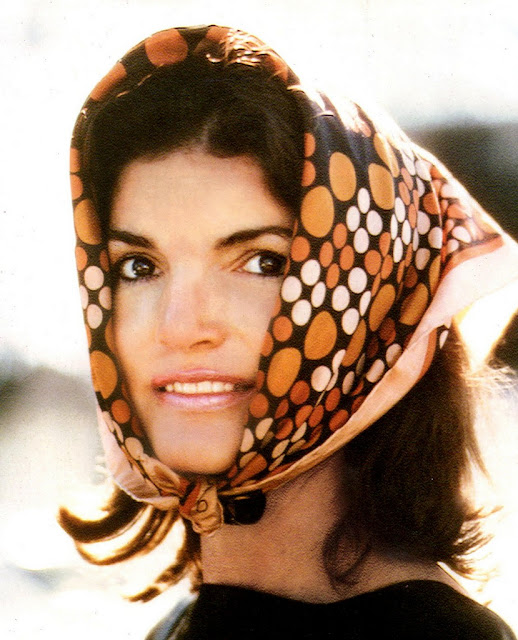
    Scarf Scarves were one of Jackie's most used accessories. She could be found wearing a head scarf paired with a fitted tee and capris or tied around her neck while wearing a simple dress. You could also tie it to your purse for instant color.
Jackie in Pucci scarf 1962
1962 (Photo by Irving Penn)

    Sunglasses Jackie was known for her large, signature sunglasses. They are the perfect finishing touch to any outfit.
Jackie in signature sunglasses 1975
1975 (Getty Images)

    Remember, to achieve the easy elegance of Jackie's style, you need to keep it simple and streamlined. Fill your closet with timeless and classic pieces and great accessories that you can mix or match for any occasion.  

Monday, July 22, 2013

Jacqueline Kennedy - Fashion Icon


It's no surprise that Jackie Kennedy is often cited as a style icon. She loved to wear designers such as Oleg Cassini, Coco Chanel, Hubert de Givenchy and Christian Dior. In August 1961, Vogue Magazine’s retrospective of the American look said of Mrs. Kennedy style: "dashing enough to capture notice, and unobtrusive enough that the wearer outshone her garments." Her own personal fashion icon was Audrey Hepburn, and you can see much of that flavor in Jackie's style.

Jackie Kennedy Audrey Hepburn

In the 50's and 60's, Jackie's daywear generally consisted of simple sleeveless dresses or pastel suits, paired with her signature pillbox hat, white gloves, and pearls or brooches. Or you might find her in high waisted trousers and a blouse, turtleneck or cashmere sweater. She usually completed her daywear with her black, oversized sunglasses.

Jackie Kennedy pastel suits

For eveningwear, Jackie's style was generally a sleeveless look in a single color with a rounded or bateau neckline as well as long sheath dresses. She also loved backless or off-the shoulder gowns. Her shoes and accessories would always match her evening apparel perfectly. A pair of white gloves was another signature accessory.

Jackie Kennedy evening gowns

While traveling to foreign countries, Jackie would dress accordingly to complement the customs of her host nation. When visiting India, her style was more conservative than what she would wear to an American event. It's this quality that helped foster Jackie's classic and classy sense of style and drew infatuation from people all over the world.

Jackie Kennedy blue dress New Delhi
First Lady Jackie Kennedy in blue dress and hat walking with 
Indian Prime Minister Jawarhalal Nehru in the garden of his residence in New Delhi. 

Jackie Kennedy Oleg Cassini apricot dress India
Jackie Kennedy at the Palace of the Maharajah in Udaipur, India during a state visit, 
wearing a fitted silk apricot dress by designer Oleg Cassini 


Into the 70's, her style continued to evolve and she adopted a sportier look. In the daytime she began wearing wide leg trousers or flowing skirts, solids or striped shirts, fitted t-shirts and black turtlenecks, silk scarves and espadrilles. She loved the look of black on top and white on the bottom. And, as always, her signature sunglasses.

Jackie Kennedy Onassis sporty style

For the evenings she wore draped, solid or patterned, glamorous gowns.

Jackie Onassis evening wear

Designer,Valentino, said this of Jackie: 'Her style was always a great inspiration for my work. She had this inner quality to make elegant the simplest dress, the most shabby raincoat, the oldest pair of slacks. Her way to wear a scarf, a pair of sunglasses, to choose a bag or shoes or go barefoot, or with a tiara was natural, she was not thinking twice, she knew by instinct.'

Jackie's style was revolutionary, youthful, modern, timeless and elegant and her fashion sense is still inspiring women around the world today.


Stay tuned for Part Five: How To Have Jackie's Style and if you missed Parts One through Four you can catch them by clicking on my Jackie button in the sidebar.

Thursday, July 18, 2013

Jackie - After The White House


'Don't let it be forgot, 
that once there was a spot, 
for one brief shining moment 
that was known as Camelot.'

Jacqueline Kennedy Onassis
michael ochs archives getty images
A few months after the President's death, Jackie moved from their home in Georgetown to a 15-room apartment in Manhattan on Fifth Avenue overlooking Central Park so that she and her children could have more privacy.

Although raising her two young children was her priority, she also focused on the creation of the John F. Kennedy Library and became intricately involved in the architecture and landscaping, as well as the academic direction of the Kennedy School of Government at Harvard University.

The public was still fascinated with her style and in 1965, she was named to the Best-Dressed Hall of Fame. In April of that year, Women's Wear Daily ran a double-page spread with the headline “The New York Jacqueline.” The publication assigned a photographer to capture her every outfit, remarking, “Whatever she does/Is The Thing to Do,/Whatever she wears is/The Thing to Wear./Whatever she sees is/The Thing to See. ---So much for privacy, huh?

She dated a few men during this time, including widower Lord Harlech (formerly, David Ormsby-Gore) but, much to America's dismay, on October 20, 1968, wearing a short lace and georgette dress by Valentino (whose designs she favored in the coming decade), Jackie married 62-year-old Aristotle Socrates Onassis in a Greek Orthodox ceremony in the chapel of the Little Virgin on the island of Skorpiós, which Onassis owned. She then split her time between New York (where Caroline and John were attending school at the time), Skorpiós, Athens, and Paris.

Jackie Kennedy wedding to Aristotle Onassis
Jackie Kennedy wedding to Aristotle Onassis - AP Photo Jim Pringle
The marriage was not one made out of love, but more of one for convenience and before long there were reports of their arguing. He was seen in Paris with another woman while she was seen in New York with various other escorts.

In March of 1965, Onassis died from pneumonia in Paris and was buried on Skorpiós. Jackie received an annuity of a reported $250,000; following a long legal battle with his daughter, Christina, Jackie was granted a reported settlement of $26 million, far less than the $125 million or more that she might have received..

The Summer after Onassis died, Jackie took a part-time job as a consulting editor at Viking Press, earning $200 a week. She also began dating Belgian-American diamond merchant Maurice Tempelsman, the two eventually moved in together in 1988.


Jackie Kennedy crusades to preserve Grand Central Station
municipal art society of ny
In 1976, New York's Grand Central Terminal was threatened with demolition. Jackie led a public crusade to save it, won, and it was then designated a National Historic Landmark. She stated, “If we don’t care about our past, we cannot hope for the future." Further civic activities in which she was involved Included the revitalization of the Broadway theater district, the Central Park Conservancy, the Literary Lions of the New York Public Library, the Metropolitan Museum's Egyptian wing and the Costume Institute, and the American Ballet Theater at Lincoln Center.

In 1978 she left Viking Press and took a part-time job as Associate Editor at Doubleday, earning $20,000 a year. She was later promoted to Senior Editor. She enjoyed a successful career in publishing until her death.

On May 19, 1994, Jacqueline Lee Bouvier Kennedy Onassis died from non-Hodgkin’s lymphoma. A funeral was held at St. Ignatius of Loyola Roman Catholic Church in New York. Senator Edward Kennedy delivered the eulogy. John F. Kennedy, Jr. read a passage from Isaiah. Caroline Kennedy Schlossberg recited Edna St. Vincent Millay’s “Memory of Cape Cod.” Renowned soprano Jessye Norman sang “Ave Maria.” Jackie was buried alongside the late President and their two deceased infants at Arlington National Cemetery. She was 64 years old.

As stated in her biography on the JFK Library and Museum, Throughout her life, Jacqueline Kennedy sought to preserve and protect America’s cultural heritage. The results of her work are still visible in Lafayette Square, across from the White House in Washington, D.C. While she was first lady, she helped to stop the destruction of historic buildings along the square, including the Renwick Building, now part of the Smithsonian Institution. In New York City, she led a campaign to save and renovate Grand Central Station. Today, more than 500,000 people pass through each day and enjoy its restored beauty, thanks to her efforts.

Jacqueline Kennedy captivated the nation and the rest of the world with her intelligence, beauty, and grace. With a deep sense of devotion to her family and country, she dedicated herself to raising her children and to making the world a better place through art, literature, and a respect for history and public service.


Jackie Kennedy in 1960
1960 AP Photo

At her funeral, John Jr. described three of her attributes: "love of words, the bonds of home and family, and her spirit of adventure." In my own opinion, she was the closest thing America has ever had to royalty, she was one of the world's most famous women, an object of fascination to generations of Americans. There will never be another Camelot again.


Stay tuned for Part Four:  Jacqueline Kennedy - Fashion Icon.  If you missed parts one and two you can find them here and here.


Thursday, July 11, 2013

Jackie - The Happiest Time

President JFK, Jackie, Caroline, and John Jr playing in the White House

 "It was really the happiest time of my life. It was when we were the closest-- I didn't realize the physical closeness of having his office in the same building and seeing him so many times a day."  - Jacqueline Kennedy  (Photograph by Cecil Stoughton)

On January 20, 1961, John Fitzgerald Kennedy took the oath of office to become the nation's 35th president and at age 31, Jacqueline Kennedy became the first lady. 

Shortly thereafter, Jackie began a major renovation of the White House. She wanted to make it into a real home for her family. She turned the sun porch on the third floor into a kindergarten school for Caroline and 12 to 15 other children, and added a swimming pool, a swing set, and a tree house on the White House lawn for Caroline and John Jr. 


Jackie Kennedy tour of the White House
Photo taken in early 1962 during a televised tour of the White House

Jackie also thought about what the White House represented to its many visitors and to citizens everywhere. She wanted people to have a greater appreciation of the history of America's most famous residence and its past inhabitants. She enlisted the aid of many experts, established a White House Fine Arts Committee, and created the position of White House curator. Gathering outstanding examples of American art and furniture from around the United States (including many items that had belonged to former presidents and their families), she restored all the public rooms in the White House. There was a televised tour of the newly restored White House, in which eighty million Americans watched, and it earned Jackie an honorary Emmy Award. To help defray the renovation costs, The White House: An Historic Guide was published.

Her legacy of fostering a national interest in historic preservation extended to her own "neighborhood," when she reversed a previous federal plan to destroy the historic Lafayette Square across from the White House and helped to negotiate not only a restoration of old buildings there, but a reasonable construction of new buildings with modern use.

Jackie used the White House to "showcase" the arts. She became the most prominent proponent for the establishment of the National Cultural Center in the nation's capital, and eventually it was named for her husband. She hosted performances of opera, ballet, Shakespeare and modern jazz, all performed by American companies. After her meeting with French Minister of Culture, Andre Malraux in May of 1961, she dazzled him so much that he made a loan to the U.S. from France, of the Louvre Museum's famous Mona Lisa painting, in which she presided over the unveiling.

Jackie traveled with the President, representing the US abroad. On a trip to Paris, as the President went from meeting to meeting, she maintained a schedule of her own events. Already admired for her style and beauty, she bedazzled the public with her knowledge and affinity for the French language, culture, and history.  She was a particular sensation, and the President delighted in her success. During a speech, the President introduced himself as, “I am the man who accompanied Jacqueline Kennedy to Paris, and I have enjoyed it.”

As first lady, Jackie also traveled to many foreign countries such as Italy, India, and Pakistan. Her interest in other cultures and her ability to speak several foreign languages, including French, Spanish, and Italian, brought her good will and admiration around the world.  And, on many of these trips, she forged personal friendship with world leaders, which helped to further the interests of the President and the U.S.

Jackie had an intense interest in the issues faced by the Administration and privately she was known to provide the President with her assessments of the political figures with whom he was negotiating.  She, also, subtly showed support of the Civil Rights movement by ensuring the kindergarten at the White House was racially integrated and that photographs of the group were publicly released.


JFK and Jackie arriving at Dallas, TX
JFK and Jackie arriving at Love Field, Dallas
Photo Credit: LIFE Magazine
In August 1963, Jackie prematurely gave birth to another son, Patrick Bouvier Kennedy, however, he suffered from a serious lung ailment and was rushed to the Children's Hospital in Boston, where he died two days later. While still recovering from this loss, another terrible tragedy befell her. On November 22, 1963, the President and Mrs. Kennedy were in Dallas, Texas. As their car drove slowly past cheering crowds, shots rang out. President Kennedy was killed and Jacqueline Kennedy became a widow at age 34.

While many of her outfits are considered iconic, it's the pink Chanel suit that she wore the 
day of her husband's assassination that remains in the forefront of the public's consciousness. Even as Lyndon Johnson took the oath of office, hours after the President's death, she refused to remove the suit, even though it was splattered with blood and brain matter, telling his wife Lady Bird Johnson, "I want them to see what they have done to Jack."

She planned the President's state funeral, it was broadcast around the world, and millions of people shared her grief and admired her courage and dignity.  She has since been noted as saying, “I have been through a lot and have suffered a great deal. But I have had lots of happy moments, as well. Every moment one lives is different from the other. The good, the bad, hardship, the joy, the tragedy, love, and happiness are all interwoven into one single, indescribable whole that is called life. You cannot separate the good from the bad. And perhaps there is no need to do so, either.”


Stay tuned for part three, Jackie - After the White House.


Thursday, July 4, 2013

Jacqueline Bouvier Kennedy


Jacqueline Bouvier, 1935.
Photograph by David Berne in the
John F. Kennedy Presidential Library and Museum, Boston

In honor of Jackie's birthday coming up on the 28th, I am celebrating with posts throughout the month dedicated to her life and style. And, since America is celebrating our Independence Day today, I thought it would be a great day to give you some tidbits on one of our Nation's greatest First Lady.


Jackie was born Jacqueline Lee Bouvier on July 28, 1929. She lived on Park Avenue and spent her summers in East Hampton until her parents divorced. Her mother remarried in 1942 and moved Jackie and her sister, Lee into their new blended family's home just across the Potomac from the nation's capital. They then spent their summers in their new family's 28 room Victorian estate in Newport, Rhode Island.

She loved horses and was a skilled rider. In 1940, she scored a double victory at the National Horse Show in Madison Square Garden. “Miss Bouvier achieved a rare distinction,” The New York Times reported. “The occasions are few when a young rider wins both contests in the same show.”

In high school, her innate sense of style was already obvious to her classmates. It was said that "She could put on a beret the right way while the rest of us would put one on and look like someone’s cleaning lady trying to cover her hair."

Besides riding her horse, Jackie spent her time writing poetry, painting, and was an avid reader. In 1947, when graduating high school, she ranked in the top 12 percent of students in the country on college board exams. That very same year, as a debutante, she was named "Queen Deb" by a society columnist.

That Fall, she enrolled in Vassar College, where of course she made the Dean's list. Shortly after, she met John Fitzgerald 'Jack' Kennedy, who at the time was a young congressman, on a train from Washington, D.C. to New York where they chatted briefly. It would be three more years before they met again.

In 1949, Jackie spent her Junior year in college, in Paris - she spoke fluent French, living with a French family while taking classes at the University of Grenoble and studying art history at the Sorbonne.

The following year she decided not to return to Vassar College but enrolled instead at George Washington University in Washington, D.C. from where she graduated with a B.A. in French Literature. After graduation, she and her sister, Lee, embarked on a trip abroad. They chronicled their adventures and in 1974, One Special Summer, was published featuring Jackie’s illustrations.

That same year, Jackie won Vogue magazine's "Prix de Paris" essay contest. Her subject was 'People I Wish I Had Known'. Those she sited were Irish playwright, Oscar Wilde, 19th Century French poet, Charles Baudelaire, and Sergei Diaghilev, founder of the Russian Ballet Russes. The requirements for the essay were rigorous and Jackie beat out 1279 other college seniors. According to her biography on the National First Ladies Library, in addition to the essay, the submission required an original theme for an entire issue, illustrations, articles, layout and design, and an advertising campaign that could be tied into the issues content. As the winner, she was entitled to a position as junior editor spending half the year in New York and the other half in Paris. However, she turned down the position at the insistence of her mother, who feared she would stay in France.

Instead, Jackie took a position at the Washington Times-Herald as the "Inquiring Camera Girl" making $42.50 a week where she would snap on-the-street pictures of people and ask them questions about current events. While in this position she covered the coronation of Queen Elizabeth II and the inauguration of Dwight D. Eisenhower.

In 1952, Jackie again met Massachusetts congressman John F. Kennedy, this time at a dinner party thrown by mutual friend, journalist Charles Bartlett and the two later began dating. That November, Jack was elected to the Senate.

In 1953, her engagement to Jack was announced and in September of that year they were married at St. Mary’s Roman Catholic Church in Newport where a crowd of 3,000 surged past a police barricade, nearly swarming the bride. After the ceremony, she and Jack stood in a receiving line for 3 hours greeting their 1300 guests. They honeymooned in Acapulco, then made their home in McLean, Virginia.

In 1954, Jackie suffered a miscarriage and then in 1956, their daughter, Arabella was stillborn. Finally in November of 1957 their daughter, Caroline was born. They purchased a Federal style home in Georgetown and in 1958, Jack was reelected to the Senate. Jackie organized his campaign schedule and edited several speeches as well as made several short speeches in Italian, French, and Spanish to the ethnic constituents.

In 1960, John received the Democratic presidential nomination. Jackie was once again pregnant and while on bed rest she penned a weekly syndicated newspaper column, “Campaign Wife.” It was also during this time that Jackie, who wore primarily fashion from French designers, sought help from Diana Vreeland and Hubert de Givenchy on chosing an American designer.  Wearing an American designer versus French was meant to help her husband's bid for the presidency. She chose Oleg Cassini as her official designer, but her fashion was still heavily influenced by French design.

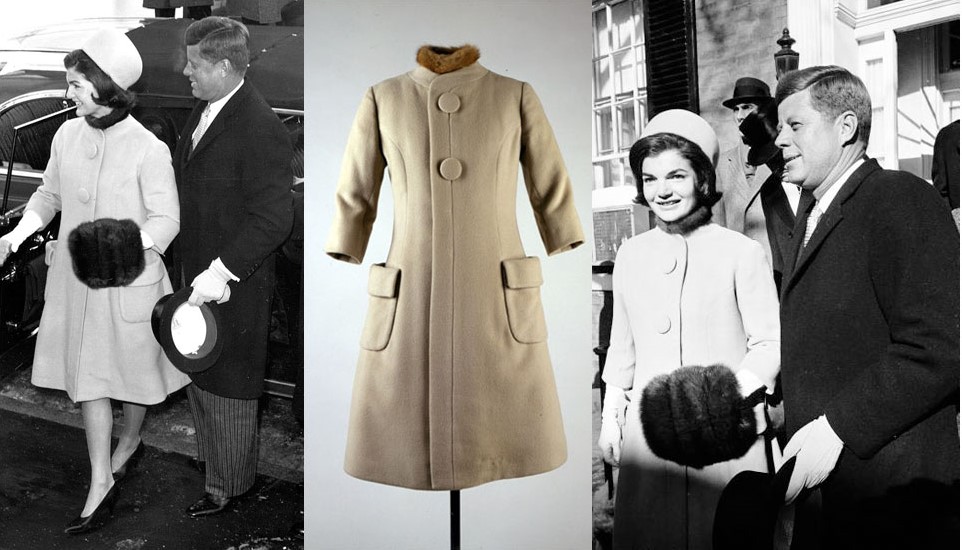
JFK was, of course, elected as the 35th President of the United States, and shortly after, Jackie gave birth to their son, John Fitzgerald Kennedy, Jr. In January, 1961, Jack was sworn in and for the ceremony, Jackie wore Cassini’s greige A-line coat with a Halston’s pillbox hat. 


For the evening’s whirl of balls, she debuted an ensemble of her own creation, executed by Ethel Frankau and Emeric Partos.  It was an ivory column floor length dress with silver-embellished bodice, veiled with a sheer over-blouse. A matching cape added a royal touch.


Jackie influenced Jack to invite many artists in all disciplines to his inauguration ceremony as a symbol of the Administration's intent to support the arts.  Her appearance in the large pillbox hat at the swearing-in ceremony overshadowed this news, however, and started a popular millinery style.  

Stay tuned for Part Two:  Jackie - The Happiest Time.